
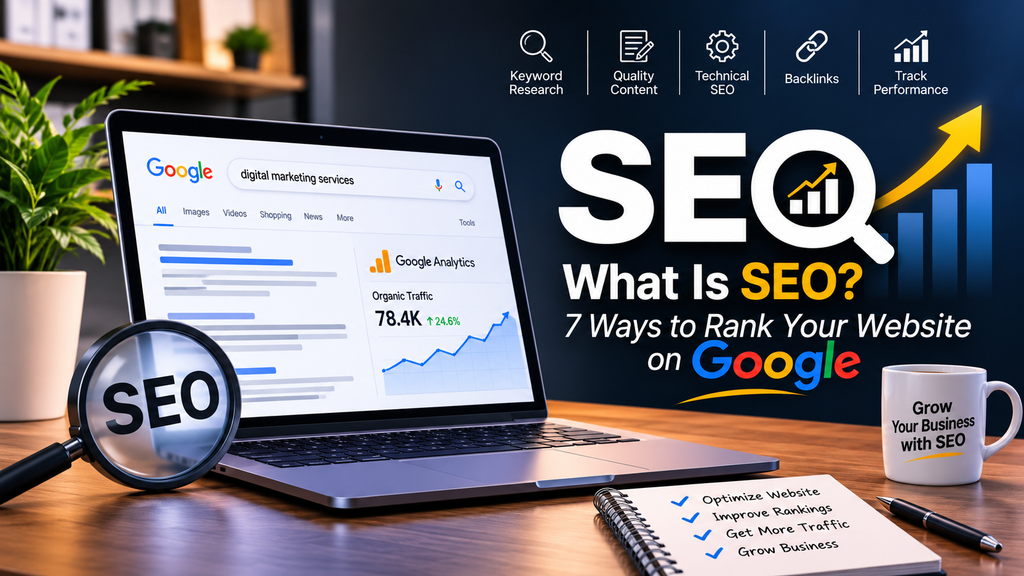
Introduction
Have you ever wondered how some websites appear at the top of Google search results while others remain hidden? The secret behind this is often Search Engine Optimization (SEO).
SEO is one of the most important digital marketing strategies for businesses that want to increase their online visibility, attract potential customers, and grow organically.
Whether you own a small business, run an e-commerce store, or manage a personal website, understanding SEO can help you reach the right audience without depending entirely on paid advertisements.
What Is SEO?
SEO stands for Search Engine Optimization. It is the process of improving a website so that search engines like Google can understand its content and show it to people searching for relevant information.
For example, when someone searches for “best digital marketing services near me,” Google displays websites that it considers relevant and useful.
A well-optimized website has a better opportunity to appear in relevant search results.
Why Is SEO Important for Your Business?
SEO helps businesses build a strong online presence and reach potential customers.
Here are five important benefits:
- Increases Website Traffic: SEO helps attract visitors who are actively searching for your products or services.
- Improves Online Visibility: Your website can appear in relevant Google search results.
- Builds Trust and Credibility: Websites that provide useful information and a good user experience can build customer confidence.
- Generates Potential Leads: SEO connects your business with people interested in what you offer.
- Supports Long-Term Growth: Organic search visibility can continue bringing visitors over time.
Types of SEO You Should Know
1. On-Page SEO
On-page SEO focuses on optimizing the content and elements within your website.
Important techniques include:
- Using relevant keywords naturally.
- Writing SEO-friendly titles and headings.
- Creating valuable and original content.
- Adding descriptive image alt text.
- Using internal links.
- Writing meaningful meta descriptions.
2. Off-Page SEO
Off-page SEO includes activities outside your website that help build its reputation and authority.
Some important techniques are:
- Earning quality backlinks.
- Guest blogging.
- Building brand awareness.
- Promoting content on social media.
- Getting genuine mentions from relevant websites.
3. Technical SEO
Technical SEO focuses on improving how search engines access, crawl, and understand your website.
Important factors include:
- Website loading speed.
- Mobile-friendly design.
- Secure HTTPS connection.
- XML sitemap.
- Proper website structure.
- Fixing broken links and crawl errors.
How to Rank Your Website on Google: 7 Practical Steps
Step 1: Find the Right Keywords
Keyword research is the foundation of SEO. Identify what your target audience searches for on Google.
Example keywords:
- Digital marketing services.
- Best SEO strategies.
- How to run Meta Ads.
- Affordable website development.
You can use tools like Google Keyword Planner, Google Trends, and Google Search Console.
Step 2: Create High-Quality Content
Content is an important part of SEO. Create original, informative, and helpful articles that answer your audience’s questions.
Avoid copying content from other websites. Focus on providing real value to your readers.
Step 3: Optimize Your Website Pages
Use your main keyword naturally in your page title, main heading, URL, introduction, and relevant sections.
Make your content easy to read with clear headings and short paragraphs.
Step 4: Improve Website Speed
Visitors prefer websites that load quickly. Optimize images, use reliable hosting, and reduce unnecessary plugins to improve performance.
Step 5: Make Your Website Mobile-Friendly
Many people browse the internet using smartphones. Ensure your website looks good and works properly on mobile, tablet, and desktop devices.
Step 6: Build Quality Backlinks
Backlinks are links from other websites pointing to your website. Focus on earning relevant, trustworthy links instead of buying spammy backlinks.
Step 7: Track Your SEO Performance
Use Google Analytics and Google Search Console to understand how your website performs.
Monitor:
- Organic website traffic.
- Search impressions.
- Click-through rate (CTR).
- Keyword performance.
- Indexed pages.
Best SEO Tools for Beginners
Here are some useful tools to start your SEO journey:
- Google Search Console – Monitor search performance and indexing.
- Google Analytics – Understand website visitors and their behaviour.
- Google Keyword Planner – Discover keyword ideas.
- Google Trends – Explore search interest over time.
- Ahrefs – Research backlinks and keywords.
- SEMrush – Analyze competitors and SEO opportunities.
Common SEO Mistakes to Avoid
- Keyword stuffing.
- Copying content from other websites.
- Ignoring mobile optimization.
- Using misleading page titles.
- Publishing low-quality content.
- Ignoring broken links.
- Expecting immediate SEO results.
Remember, SEO requires consistency, patience, and continuous improvement.
Conclusion
SEO is not just about ranking higher on Google. It is about making your website more useful, accessible, and valuable to your target audience.
By focusing on keyword research, quality content, technical improvements, and user experience, you can build a strong foundation for long-term organic growth.
Start implementing these SEO strategies today and take your website one step closer to reaching the right audience.
Want to grow your business online? Let’s build a smarter digital marketing strategy!